,

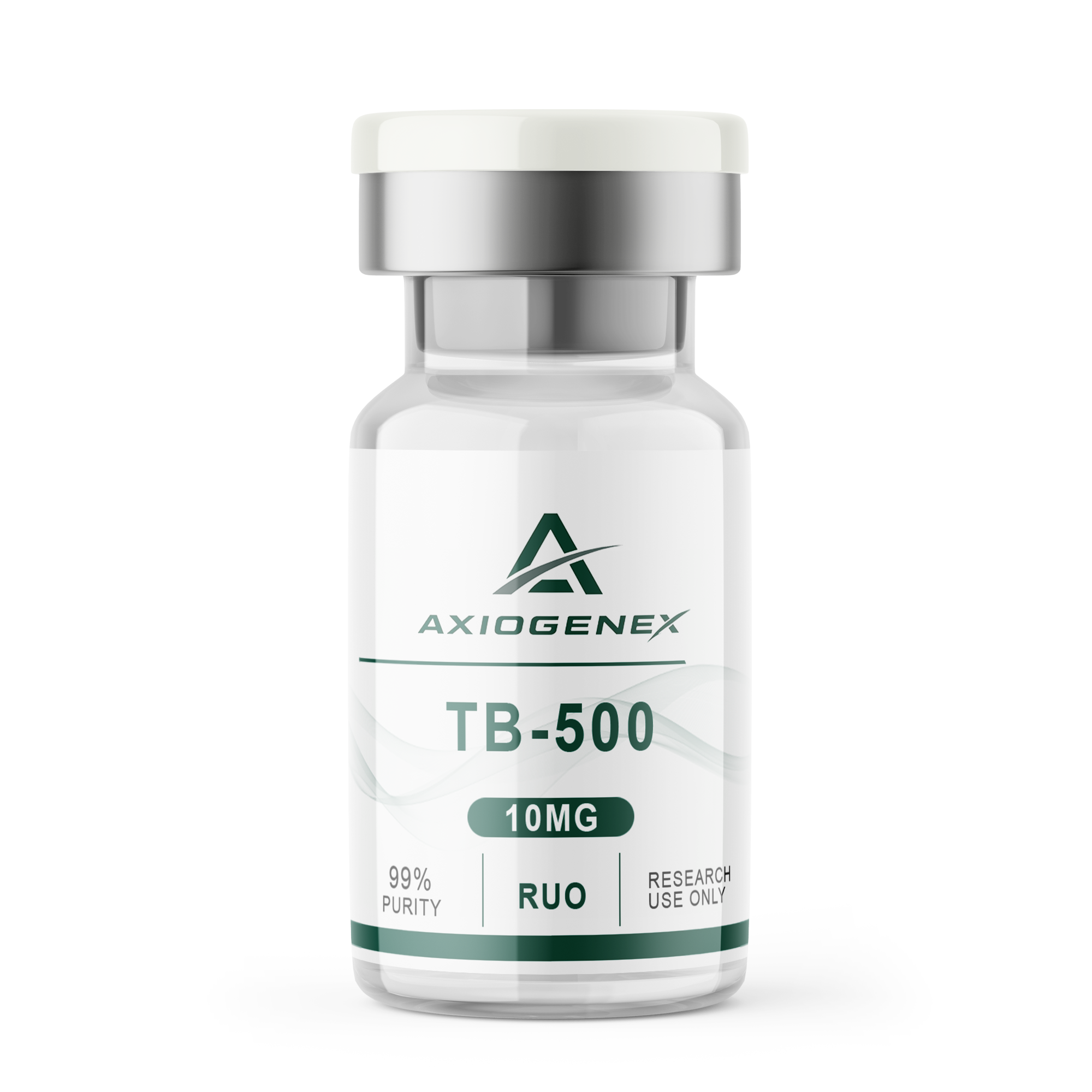
TB-500 10mg

$69.99

SKU: TB-500-10MG Categories: ,

TB-500 10mg is a premium-grade synthetic version of the naturally occurring peptide Thymosin Beta-4, provided in a high-concentration vial for precision in advanced experimental designs. This research peptide is meticulously formulated to support investigations into cellular signaling, tissue repair mechanisms, and angiogenic pathways. Produced under rigorous quality control standards, it is engineered for scientific consistency in protocols requiring high-purity compounds and long-term stability models.

For Research Use Only (RUO). Not for human or animal use.

Overview

TB-500 10mg is a potent synthetic research peptide frequently utilized in preclinical and analytical literature to investigate cellular migration, wound-healing signaling, and angiogenic mechanisms within specialized biochemical frameworks. This higher-concentration formulation is engineered specifically for laboratory environments requiring precise peptide characterization and rigorous experimental oversight.

Ongoing scientific inquiry into TB-500 focuses on non-clinical environments, where researchers examine its role as a major G-actin sequestering molecule and its influence on signaling cascades related to tissue repair and inflammatory modulation. In established in vitro and in vivo models, investigators utilize this compound to analyze the binding kinetics of Thymosin Beta-4, downstream molecular responses, and the structural stability of the peptide under varied experimental parameters.

All data and observations associated with this compound are strictly limited to laboratory-based scientific investigation. No assertions are made concerning therapeutic potential, clinical efficacy, physiological impact, or safety for human or veterinary applications.


Biochemical Characteristics

TB-500 10mg is a synthetic research peptide extensively documented in scientific literature regarding cellular migration, actin-sequestering activity, and the analysis of regenerative signaling pathways. The characterization of this compound is performed solely through rigorous physicochemical testing and controlled laboratory-based research protocols.

Biochemical evaluation of TB-500 typically involves precise identity verification, purity analysis via high-performance liquid chromatography (HPLC), molecular mass confirmation, and stability assessments under standardized storage conditions. In preclinical settings, researchers utilize experimental models to investigate the peptide’s interaction with G-actin, as well as its influence on intracellular signaling cascades, post-reconstitution peptide integrity, and molecular behavior within angiogenic and tissue repair pathways. These studies are conducted exclusively using structured in vitro systems and controlled experimental frameworks dedicated to advanced scientific inquiry.

All technical documentation and data relating to this compound are confined to investigational and non-clinical laboratory contexts. No claims are made regarding therapeutic potential, clinical use, physiological outcomes, or safety for human or veterinary applications.

    • Molecular Class: Synthetic Thymosin Beta-4 analogue


    • Peptide Composition: Single-chain peptide (TB-500 acetate)


    • Purity: Research-grade, high-purity peptide material


    • Material State: Lyophilized peptide powder


    • Quantity: 10mg per vial


    • Intended Use: Laboratory research only


Research Applications

Within scientific and preclinical literature, TB-500 10mg is identified as a synthetic research peptide evaluated exclusively in controlled, non-clinical laboratory environments. Its application is strictly limited to analytical investigation, cellular signaling studies, and tissue repair modeling conducted under rigorous experimental protocols.

Documented laboratory research contexts for this higher-concentration variant may include:

    • Angiogenic Signaling Studies: Examining pathways associated with new blood vessel formation and peptide-mediated regulatory mechanisms within controlled cellular systems.


    • Actin-Binding Interaction Analysis: Focusing on the binding selectivity, affinity, and interaction dynamics of Thymosin Beta-4 with G-actin in regulated laboratory settings.


    • Cellular Migration Evaluation: Utilizing experimental models designed to assess the rate and mechanisms of cell movement and cascading effects linked to wound-healing pathways.


    • Stability and Structural Integrity Testing: Assessing peptide resilience following reconstitution and throughout varied storage and handling conditions in the lab.


    • Comparative Peptide Research: Exploring structural and functional relationships between TB-500 and other regenerative signaling compounds within broader biochemical frameworks.


    • Analytical Benchmarking: Procedures utilizing validated reference standards, mass spectrometry, and chromatographic verification for laboratory quality control assessments.


All referenced applications remain strictly confined to laboratory-based investigation and non-clinical experimental use. No statements are made regarding biological outcomes, therapeutic use, clinical relevance, or applicability beyond structured research settings.


Pathway / Mechanistic Context

In experimental and preclinical research literature, TB-500 10mg is referenced in relation to actin-sequestering frameworks and receptor-mediated communication pathways examined at the molecular and biochemical interaction level. These investigations are conducted strictly within controlled laboratory environments to support the structured analysis of peptide-driven signaling activity, protein interaction dynamics, and downstream pathway modulation under defined experimental conditions.

Scientific discussion surrounding TB-500 often emphasizes its role as a major G-actin sequestering molecule and its function within signaling models involving regulated cellular migration and tissue remodeling processes. Within laboratory research systems, mechanistic evaluation may include:

    • Actin-Binding Analysis: Investigating the high-affinity bond between the peptide and G-actin to understand its role in cytoskeletal regulation.


    • Intracellular Signaling Cascades: Observation of secondary messenger responses, such as the activation of the PI3K/Akt pathway, within controlled cellular environments.


    • Gene Expression Responses: Examination of molecular changes and upregulated transcription factors triggered by peptide-mediated interactions.


    • Pathway Mapping: Identifying downstream regulatory pathways associated with angiogenesis and inflammatory modulation under controlled in vitro conditions.


All mechanistic interpretations remain observational and exploratory in nature and are confined exclusively to non-clinical research settings. No representations extend beyond controlled experimental frameworks, and no claims are made regarding biological outcomes, clinical relevance, or applicability outside structured investigational use.

Preclinical Research Summary

Preclinical research literature references observational findings related to TB-500 10mg derived from controlled experimental systems designed to evaluate peptide-protein interaction dynamics within non-clinical research frameworks. These investigations focus on laboratory-based analysis of peptide identity verification, actin-binding behavior—particularly high-affinity interactions with G-actin—molecular stability profiling, and signaling pathway activity under defined analytical conditions.

Exploratory research discussions involving this 10mg concentration commonly include evaluation within regenerative signaling models and cytoskeletal-mediated communication systems examined in structured laboratory environments. Additional analyses may include:

    • Stability Profiling: Assessment of peptide stability under varying storage conditions and across extended experimental timelines.


    • Structural Integrity: Verification of peptide composition following reconstitution in various laboratory media.


    • Pathway Mapping: Identifying interaction patterns within angiogenic and tissue remodeling pathways.


    • Intracellular Observation: Monitoring downstream signaling responses, such as cell migration rates, within regulated in vitro and preclinical experimental systems.


All documented observations remain confined to investigational, analytical, and preclinical laboratory contexts and are presented solely for exploratory scientific research purposes. No findings imply clinical relevance, therapeutic application, physiological effects, or suitability for human or veterinary use. All references are limited exclusively to controlled laboratory research environments.

Form & Analytical Testing

nTB-500 10mg is supplied as a research-grade synthetic peptide produced under rigorous manufacturing standards to ensure batch consistency, precise identity verification, and high-purity specifications essential for advanced laboratory analysis. This compound is provided in a lyophilized peptide powder form, which supports long-term stability and standardized preparation protocols within structured analytical and experimental research workflows.

Material verification for this 10mg format centers on physicochemical characterization and quality parameters critical to peptide identity and actin-interaction study. Analytical evaluation typically includes:

    • Identity Confirmation: Verification of the peptide sequence and the specific Thymosin Beta-4 structure.


    • Purity Assessment: Utilization of validated chromatographic techniques, such as High-Performance Liquid Chromatography (HPLC), to ensure research-grade quality.


    • Batch Consistency: Systematic verification to ensure uniformity across different production lots.


    • Molecular Mass Determination: Confirmation of chemical composition via mass spectrometry.


    • Stability Testing: Evaluation of the material under defined laboratory storage and handling conditions to maintain experimental integrity.


All testing, validation, and quality control procedures are conducted exclusively to support material characterization within controlled, non-clinical laboratory research environments.


Referenced Citations


    • Huff, T., et al. (2001). Thymosin β4 is required for cell migration and increased expression of vascular endothelial growth factor. Journal of Biological Chemistry, 276(30), 28246–28252.


    • Grant, D. S., et al. (1995). Thymosin β4 stimulates endothelial cell migration and angiogenesis. Journal of Cell Science, 108(3), 1069–1076.


    • Sosne, G., et al. (2002). Thymosin β4 promotes corneal wound healing and modulates inflammatory mediators in vivo. Experimental Eye Research, 74(2), 293–299.


    • Philp, D., et al. (2003). Thymosin β4 promotes angiogenesis, muscle regeneration, and adipogenesis. Vitamins & Hormones, 66, 427–446.


    • Goldstein, A. L., et al. (2005). Thymosin β4: a multi-functional regenerative peptide. Basic properties and clinical applications. Expert Opinion on Biological Therapy, 5(2), 233–240.


    • Malinda, K. M., et al. (1997). Thymosin β4 stimulates whole-blood vessel formation. Bone, 21(3), 221–227.


    • Crockford, D., et al. (2010). Thymosin β4: Physicochemical and structural properties of a multifunctional peptide. Annals of the New York Academy of Sciences, 1194(1), 179–189.


    • Bock-Marquette, I., et al. (2004). Thymosin β4 activates integrin-linked kinase and promotes cardiac cell migration, survival and cardiac repair. Nature, 432(7016), 466–472.


    • Kleinman, H. K., & Sosne, G. (2016). Thymosin β4: Promising therapeutic properties in the repair of damaged tissue. The International Journal of Biochemistry & Cell Biology, 77, 102–106.


ALL ARTICLES AND PRODUCT INFORMATION PROVIDED ON THIS WEBSITE ARE FOR INFORMATIONAL AND EDUCATIONAL PURPOSES ONLY. FOR RESEARCH USE ONLY (RUO). NOT FOR HUMAN OR VETERINARY USE.


RUO Disclaimer

All products offered on this website, including TB-500 10mg, are intended strictly for in vitro laboratory research purposes only. In vitro research refers to experimental procedures conducted outside of living organisms within controlled laboratory environments for analytical and investigative study.

These materials are not classified as drugs, pharmaceuticals, dietary supplements, or medical products. They have not been reviewed, evaluated, or approved by the U.S. Food and Drug Administration (FDA) for the diagnosis, treatment, cure, or prevention of any disease or medical condition. Any use outside of structured laboratory research—including administration to humans or animals—is strictly prohibited.

For Laboratory Research Use Only (RUO). Not for human use, medical use, diagnostic use, or veterinary use.

Reviews

There are no reviews yet.

Be the first to review “TB-500 10mg”

Your email address will not be published. Required fields are marked *

Scroll to Top